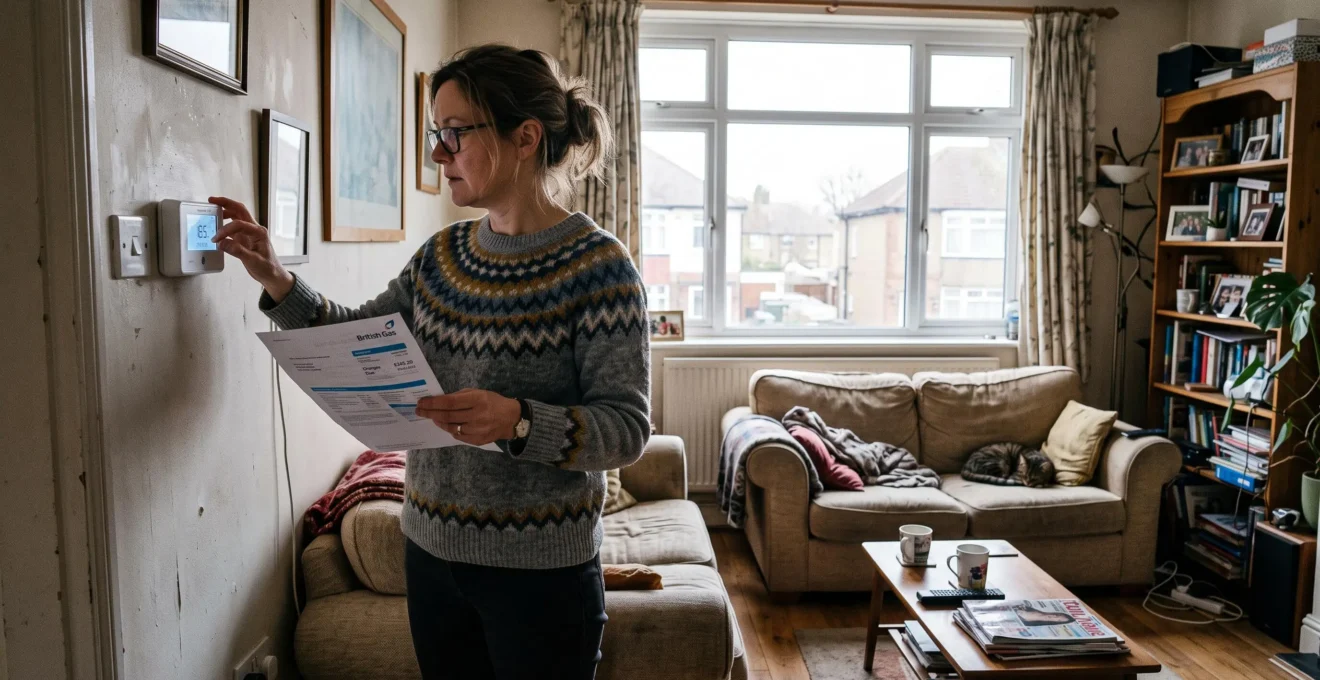
Reducing household energy bills by 15% in 30 days is an ambitious target, but it can provide a useful framework for finding avoidable costs. The most effective starting point is not buying better equipment or making every room colder. It is understanding what the household pays for, identifying its largest controllable expenses and changing settings that no longer match daily life.
Energy bills combine consumption-related charges with costs that remain payable even when usage falls. A household may therefore reduce electricity or gas consumption substantially without seeing the same percentage reduction in its total bill. Tariff choices, billing dates, heating technology and existing routines all influence the outcome.
A practical 30-day strategy combines a short energy audit, a tariff comparison, adjustments to existing heating controls and regular meter checks. The potential saving depends on the household’s starting point: a poorly matched heating schedule may offer considerable scope for improvement, while an already efficient household may have much less to cut.
How to approach a 15% energy bill reduction
- Identify your three largest controllable energy costs before changing household routines.
- Compare tariff prices and contract conditions alongside potential consumption reductions.
- Use existing heating controls, daily habits and meter readings to test savings without sacrificing essential comfort.
- Why Does Your Bill Stay High Even After You Turn the Heating Down 1°C?
- How to Find the 3 Biggest Energy Cost Drivers in Your Home in 45 Minutes?
- Which Saves More This Month: Switching Tariff or Cutting 10% of Usage?
- The “Quick Saving” Mistake That Can Raise Your Bill by 5% Over 8 Weeks
- In What Order Should You Cut Home Energy Use to See Savings on the Next Bill?
- How to Build a Low-Energy Daily Routine Using 3 Triggers You Already Have?
- How to Set Up Smart Heating Controls in 60 Minutes Without Fighting Your Own House?
- How Can You Reduce Energy Consumption Without Feeling Like You Live in a Cold House?
Why Does Your Bill Stay High Even After You Turn the Heating Down 1°C?
Your bill can remain high after lowering the thermostat because heating is only one component of household energy expenditure. Standing charges, electricity used by continuously operating appliances, hot water demand and tariff rates still contribute to the total. A one-degree reduction may help, but its financial effect depends on how much heating you originally used.
To understand the difference, separate the cost of supplying energy from the cost of consuming it. In Great Britain, Ofgem‘s explanation of electricity and gas bill calculations identifies unit rates, daily standing charges and different tariff structures. Other English-speaking markets may use different names, taxes or billing arrangements.
A simplified bill calculation looks like this:
Energy cost = units consumed × unit rate + applicable fixed charges, taxes and other fees.
For a hypothetical electricity bill containing 300 kWh at £0.25 per kWh and £12 in fixed charges, the total before other applicable charges is £87. Reducing consumption by 10% saves £7.50, or approximately 8.6% of that total—not 10%.
This distinction matters when setting a 15% bill-reduction target. Fixed charges do not disappear simply because heating runs less frequently. Meanwhile, refrigeration, connected equipment and other regular household loads may continue operating regardless of thermostat settings.
The energy consumed during periods of limited household activity is sometimes described as the baseload. It is not necessarily waste: refrigerators, essential equipment and other legitimate loads may contribute.
To investigate it, record meter readings at comparable times on two days with similar routines. Subtract the earlier reading from the later one and note what was operating. Repeat during a quieter overnight period if practical. These readings provide an initial comparison, not a precise appliance-by-appliance breakdown or a definitive measurement of baseload.
Thermostat advice also requires context. A one-degree reduction affects a home heated by a gas boiler differently from one using electric resistance heating or a heat pump. Insulation, outdoor temperatures and occupancy influence the result.
More importantly, reducing a thermostat setting does not establish a guaranteed percentage saving. A household should compare consumption over similar weather and occupancy conditions before judging whether the adjustment worked.
Once fixed and variable costs are separated, the next step is to find which parts of actual consumption offer the greatest opportunity for change.
How to Find the 3 Biggest Energy Cost Drivers in Your Home in 45 Minutes?
A 45-minute home energy audit can produce a useful shortlist of three likely cost drivers by combining bill information, meter observations and a review of heating, hot water and appliance routines. It cannot measure every appliance precisely, but it can identify where further testing is most worthwhile before you spend money or make uncomfortable changes.
Start with the most recent bill and any available smart meter display or supplier app. Record the energy units used, unit prices, fixed charges and billing period. If your heating uses a different fuel from your electricity supply, examine both rather than treating all energy use as one category.
Then divide the audit into four practical stages:
- First 10 minutes: record the current meter reading, check the bill and note any available daily consumption history.
- Next 15 minutes: inspect the thermostat, heating programmer, room controls and hot water schedule. Look for operation during unoccupied hours.
- Next 10 minutes: review major appliances, electric heating, water heating, refrigeration and devices regularly left operating.
- Final 10 minutes: rank the three most plausible cost drivers and write down one verification test for each.
Energy Saving Trust explains in its guide to smart meters and in-home displays that these devices can help households observe overall consumption. Electricity information may appear almost immediately, while gas information is typically updated less frequently. Neither automatically tells you exactly which appliance caused a spike.
If your meter supports convenient live readings, record consumption at the beginning and end of a controlled observation. However, a 45-minute audit is mainly a screening exercise; reliable confirmation may require several days of comparable data.
Patterns become more useful when you connect them to plausible causes instead of immediately assuming the oldest appliance is responsible. A recurring evening peak may reflect cooking, heating or hot water use; significant consumption during unoccupied hours may point towards automated schedules or continuously operating equipment.
The following grid helps translate observations into tests and possible interventions.
| Observed pattern | Likely area to investigate | First action |
|---|---|---|
| High consumption during unoccupied hours | Heating or hot water schedule | Check existing programmed times against actual occupancy |
| Regular overnight electricity consumption | Refrigeration, standby loads or timed equipment | Identify permitted, non-essential loads and compare readings safely |
| Large costs despite moderate usage | Unit prices or fixed charges | Compare available tariffs using actual consumption |
| Repeated peaks at predictable times | Heating, cooking or water heating | Record which activities coincide with each peak |
Only test appliances that can safely be switched off. Do not disconnect refrigeration, medical equipment, safety systems or essential heating to investigate consumption.
Your five-step home energy audit checklist
- Copy the latest bill’s usage, unit rates, fixed charges and dates into a one-page baseline record.
- Record a dated meter reading and note which energy supplies and units it covers.
- Write down existing heating and hot water programmes, highlighting potential occupancy mismatches.
- Identify three likely cost drivers, with one specific observation supporting each.
- Assign one safe verification test to every shortlisted driver and record when you will compare results.
After identifying where the money might be going, compare the potential savings from lower usage with those available through a different tariff.
Which Saves More This Month: Switching Tariff or Cutting 10% of Usage?
Switching tariff saves more when the reduction in energy prices and fixed charges exceeds the savings from using 10% less energy, after accounting for any switching costs. Cutting consumption wins when a cheaper tariff is unavailable, exit fees outweigh short-term benefits or the household has significant avoidable usage. The best choice comes from calculating both options.
A tariff change affects the price paid for energy, while behavioural changes affect the quantity consumed. The two approaches address different components of the same bill and can be combined.
Consider a purely hypothetical monthly electricity bill:
Illustrative comparison: two ways to lower a bill
Assume a household consumes 400 kWh at £0.30 per kWh and pays £15 in monthly fixed charges. Its baseline bill, excluding any additional taxes or fees, is £135.
Option A — 10% less usage: consumption falls to 360 kWh. The bill becomes £123, saving £12.
Option B — lower unit rate: consumption stays at 400 kWh, but the rate falls to £0.27 per kWh, with fixed charges unchanged. The bill also becomes £123, saving £12 before switching costs.
Combining both changes would produce a bill of £112.20, saving £22.80. These figures illustrate arithmetic, not actual available tariffs or predicted household results.
Timing can change the comparison. Reduced usage begins affecting measured consumption as soon as behaviour changes, while a new tariff applies only from its effective date. Whether either adjustment appears on the next invoice depends on the billing period and supplier arrangements.
Before switching, verify the contract terms. Ofgem’s guidance on switching home energy suppliers explains the importance of checking existing tariff conditions and potential exit fees in Great Britain.
For example, an illustrative £50 early-exit fee would more than offset a £12 saving over a single month. A longer comparison might produce a different result, but the 30-day calculation should not conceal the immediate cost.
Compare offers using the same estimated consumption, billing duration, relevant taxes and payment conditions. If the household uses a time-of-use tariff, include when electricity is consumed rather than comparing headline rates alone.
Geography matters too. The ability to change supplier, the types of tariffs offered and consumer protections differ across English-speaking markets. Some households may have limited supplier choice or heating arrangements outside ordinary retail energy contracts.
Combining a suitable tariff with verified usage reductions can be more effective than either measure alone, provided the changes remain affordable and practical over time.
The “Quick Saving” Mistake That Can Raise Your Bill by 5% Over 8 Weeks
An aggressive energy cut can backfire when it causes discomfort, disrupts safe equipment operation or leads to compensating consumption later. A bill rising by 5% over eight weeks is a possible scenario, not a documented universal outcome. The real mistake is choosing a short-term restriction that the household cannot maintain or that conflicts with its heating system.
Turning heating off completely, dramatically changing hot water settings or attempting to reduce refrigeration energy through unsafe temperature adjustments may seem like immediate solutions. These actions introduce risks that are not justified by an unverified saving.
A safer approach is to distinguish necessary energy use from unnecessary operation. Reducing heating during suitable unoccupied periods can make sense, but maintaining appropriate conditions may be essential for occupants, pipes, moisture management and the heating equipment itself.
There is also an important technical distinction between heating systems. A gas boiler operating with conventional radiator controls may benefit from schedules that reduce heating during absence. A heat pump can respond differently to substantial temperature setbacks, and the most efficient operation depends on its design and controls.
Keeping a home constantly heated is not automatically cheaper than allowing a controlled temperature setback. The claim that every cold restart consumes more total energy than maintaining warmth continuously is too broad. Heating performance should be evaluated against the system, building and conditions involved.
The behavioural problem is equally important. A household that feels persistently cold may override programmes, increase temperatures sharply or abandon its energy-saving routine altogether. Such changes can reduce or eliminate the original benefit.
Before adopting an adjustment, apply three questions:
- Does it preserve safe indoor conditions and essential hot water or appliance functions?
- Can everyone in the household follow it comfortably for at least eight weeks?
- Can its impact be checked against consumption records rather than assumed?
Minor, repeatable adjustments generally offer a more dependable foundation than extreme restrictions. Correcting a poorly matched heating schedule, using available room controls and avoiding unnecessary appliance operation are examples worth testing.
The eight-week horizon is useful because it allows time to observe whether a routine survives ordinary life. It does not establish that a particular tactic will increase bills by exactly 5%.
Reliable savings come from adjustments that remain effective after the initial enthusiasm fades. That makes the order of changes particularly important.
In What Order Should You Cut Home Energy Use to See Savings on the Next Bill?
Start with the largest verified avoidable cost, then review your tariff and address smaller recurring loads. For many homes, heating schedules and hot water operation deserve early attention, although their priority depends on the equipment and consumption profile. Make changes early in the billing cycle, track the resulting usage and avoid relying on payment amounts alone.
The audit from section 4.2 should determine your priorities. A home with electric heating during frequent absences requires a different sequence from a home with modest consumption but an expensive supply contract.
A practical 30-day sequence can be organised into four stages:
- Days 1–3 — establish the baseline. Record meter readings, billing dates, tariffs and the three main cost drivers. Review settings without making several changes at once.
- Days 4–10 — address the largest controllable driver. Adjust an existing heating programme or another verified source of unnecessary consumption, subject to safety and comfort requirements.
- Days 11–20 — evaluate price and smaller loads. Compare tariff terms and check secondary appliance routines. Record the date each change becomes effective.
- Days 21–30 — verify results. Compare consumption rates with the initial baseline and investigate unexplained increases before making further adjustments.
Changes made early in a billing period influence more of that period’s consumption than changes made near its end. However, a tariff switch may not take effect immediately, and the timing of an invoice does not necessarily match a 30-day experiment.
Keep a small record with the date, action, meter reading, tariff rate and relevant weather or occupancy changes. This makes the final comparison more informative.
For example, a reduction in gas usage during unusually mild weather should not automatically be credited entirely to a thermostat adjustment. Weather and heating demand are connected, so the result needs cautious interpretation.
A fixed monthly payment is another potential source of confusion. The amount collected through an estimated or levelled payment plan may stay unchanged even when actual usage falls. Conversely, a payment adjustment does not by itself prove that consumption changed.
The strongest evidence comes from comparing actual energy units and the prices charged for them, alongside any fixed costs.
When possible, isolate changes rather than introducing several simultaneously. A household that changes tariff, heating programme and appliance routines on the same day may establish that total expenditure has fallen, but struggle to determine which action deserves the credit.
The next challenge is keeping those improvements in place without turning energy saving into another demanding daily task.
How to Build a Low-Energy Daily Routine Using 3 Triggers You Already Have?
Build a sustainable energy-saving routine around three events that already happen every day: waking up, leaving home and going to bed. Attach one simple action to each event, preferably through existing timers or programmed settings. This reduces the number of decisions required and helps match energy consumption to genuine household needs.
Habit triggers work because an established event reminds you to perform another action. For household energy management, the most useful actions involve recurring consumption rather than infrequent tasks with little effect on the bill.
Morning trigger: waking up. Check whether the heating programme reflects when rooms actually need warmth. If the house follows a predictable routine, an existing programmer may already be capable of bringing occupied rooms to a comfortable temperature without running unnecessarily throughout the night.
Departure trigger: leaving home. Confirm that heating follows a suitable unoccupied setting if the system supports one. Check that non-essential devices are not operating needlessly, while leaving refrigeration, safety equipment and other essential loads undisturbed.
Evening trigger: going to bed. Review the next day’s occupancy, heating schedule and any appropriate hot water programme. Where existing controls permit safe zoning, avoid heating unused rooms to the same temperature as occupied spaces.
These actions should not become an elaborate inspection ritual. If the household’s timetable is predictable, configure the appropriate schedule once and use the daily trigger mainly to check exceptions.
For example, a family whose members usually leave home on weekdays can align an existing heating programme with those hours, then override it when someone stays home. This avoids repeated manual decisions and reduces the chance of returning to an uncomfortable property.
The routine also needs to account for people who remain at home, different sleep schedules, vulnerable occupants and heating systems that require alternative control strategies.
Consistency is useful only when the routine remains suitable. If a setting regularly causes discomfort or requires manual correction, revise the programme rather than assuming occupants must adapt to it.
After two weeks, compare energy use during similar occupancy and weather conditions. Ask whether the triggers are easy to remember, whether programmed settings work as intended and whether comfort remains acceptable.
Existing automatic controls can reduce the effort further, provided their settings match the heating system and the way the home is occupied.
How to Set Up Smart Heating Controls in 60 Minutes Without Fighting Your Own House?
Use a 60-minute session to review and configure heating controls already installed in your home. Begin by identifying the heating system, understanding its thermostat and timer settings, and checking whether existing schedules match occupancy. This is a configuration exercise, not a promise that every smart thermostat can be installed safely or fully optimised in one hour.
Existing controls may include a room thermostat, central programmer, thermostatic radiator valves or an installed smart controller. Each performs a different function, and the available adjustments depend on the system.
Energy Saving Trust’s advice on economical central heating controls explains how programmers, thermostats and radiator valves can support more efficient heating operation. Its guidance primarily addresses boiler-based heating and distinguishes heat pumps as requiring separate consideration.
A useful configuration session follows four stages:
- Minutes 0–15: identify the system. Determine whether the home uses a conventional boiler, combination boiler, heat pump or another heating arrangement. Locate the controls and any existing operating instructions.
- Minutes 15–30: review compatibility and functions. Establish whether the installed controls manage heating, hot water or individual rooms, and which settings are safe for the occupant to change.
- Minutes 30–45: align the schedule. Match available programmes to normal waking, occupancy and sleeping periods, while preserving appropriate comfort and system operation.
- Minutes 45–60: test and document. Check that the settings have been saved, review manual overrides and record the original and updated programme.
If a compatible smart controller is already present, this session may involve only menu adjustments. If wiring, a receiver, a boiler interface or a new thermostat is required, professional installation or technical assessment may be necessary. That work falls outside the no-new-equipment approach.
In boiler-based systems, radiator valves may provide room-level temperature control. In other systems, changing one room’s settings can affect overall operation. Avoid assuming that every property supports independent zoning.
For most people, Energy Saving Trust describes 18–21°C as a typical comfortable thermostat range. This is general guidance, not an individually appropriate target for every household. Health needs, indoor conditions and personal circumstances may justify different settings.
£120 per year
Energy Saving Trust’s illustrative annual estimate for lowering a thermostat from 22°C to 21°C in Great Britain. It is not a guaranteed household saving, does not apply identically to other countries and cannot be treated as a £120 saving within 30 days.
Energy Saving Trust, The most economical ways to use your central heating, updated 11 September 2026.
A common configuration mistake is accepting a default programme without checking whether it reflects daily life. Another is creating unnecessarily complicated heating zones that regularly need manual overrides.
Smart control data can help evaluate the programme, but temperature histories and heating activity do not always reveal exact energy expenditure. Use actual meter data when assessing bill reductions.
After approximately two weeks, check whether occupied rooms become comfortable when required, whether heating operates unnecessarily during absences and whether consumption patterns have improved under comparable conditions.
The ultimate measure of success is not how sophisticated the heating schedule looks, but whether it reduces unnecessary consumption while keeping the home comfortable.
Key takeaways before making the home more comfortable and efficient
- Reduce unnecessary heating hours and inappropriate room settings before accepting colder living conditions.
- Match adjustments to the heating technology, actual occupancy and individual comfort requirements.
- Judge improvements using measured consumption, tariff costs and sustainable routines rather than headline saving percentages.
How Can You Reduce Energy Consumption Without Feeling Like You Live in a Cold House?
You can reduce household energy consumption without making the home feel cold by concentrating warmth where and when it is needed. Existing room controls, appropriate heating schedules, draught management and improved use of curtains can reduce unnecessary heat demand. The most suitable combination depends on the building, heating technology and occupants’ comfort requirements.
Comfort is not determined by air temperature alone. Cold surfaces, draughts, humidity and uneven heating can make a room feel uncomfortable even when the thermostat displays an apparently reasonable temperature.
For that reason, lowering the thermostat repeatedly may be less useful than identifying why occupants feel cold in the first place.
A room with noticeable draughts may benefit from closing an existing poorly sealed window properly, managing curtains appropriately or addressing a simple removable draught source. Avoid blocking intentional ventilation, combustion air supplies or other safety-critical openings.
Similarly, furniture and curtains positioned directly over radiators can interfere with the intended distribution of warmth. Improving airflow around existing emitters may help rooms heat more effectively without changing equipment.
Heat the right space at the right time is a more practical principle than making every room equally cold. If the installed system supports suitable room control, spaces used infrequently may require different settings from living areas and bedrooms.
However, reducing heat to unused rooms should not compromise moisture control, frost protection or the operating requirements of the heating system.
Households using conventional boiler-based systems can review room thermostats, programmers and radiator valves together. Heat pump users should check system-specific instructions before applying substantial setbacks or aggressive room zoning.
Simple comfort improvements also make routines easier to maintain. Appropriate clothing and blankets can provide additional personal warmth, but they should complement rather than replace safe indoor heating, particularly for people who need warmer conditions.
A durable 30-day plan brings the earlier steps together:
- Measure: establish actual consumption and identify the three largest avoidable cost drivers.
- Prioritise: correct unsuitable heating schedules and other significant controllable loads.
- Compare: calculate whether available tariffs offer additional savings after contract costs.
- Automate: use existing controls and the three daily triggers to maintain improvements.
- Verify: compare energy units and overall charges after 30 days, accounting for changes in weather, occupancy and tariff conditions.
The 15% target must be evaluated against the entire relevant bill, not only a selected appliance or heating component. A household might reduce controllable heating consumption significantly yet achieve a smaller percentage reduction in total expenditure because of fixed charges and other unaffected energy uses.
Likewise, a reduction in monthly payments does not necessarily mean actual energy costs have fallen. Billing adjustments, estimates and account credits should be separated from consumption-based savings.
The goal is therefore a measurable improvement, not a guaranteed headline result. Even when the household cannot reach 15% within 30 days, it can establish better settings, identify avoidable costs and build a repeatable way to monitor expenditure.
Start with your current bill and one dated meter reading, choose the most promising safe adjustment, and review its effect before adding another. The strongest long-term saving is one the household can verify and comfortably maintain.
Can every household reduce its energy bill by 15% in one month?
No. A 15% reduction is a target rather than a guaranteed outcome. Results depend on existing efficiency, tariff structure, heating needs, household occupancy and how much avoidable consumption exists. Fixed charges and other unaffected costs can prevent a 15% consumption reduction from becoming an equivalent bill reduction.
Should energy savings be measured in money or kilowatt-hours?
Track both. Kilowatt-hours help reveal changes in consumption, while monetary costs show the effect of unit rates, fixed charges and other fees. Comparing both measures prevents a tariff change from being mistaken for improved energy efficiency and helps distinguish genuine savings from payment-plan adjustments.
Can renters reduce heating costs without changing the property?
Often, yes. Renters may be able to adjust existing heating programmes, use installed radiator controls, manage appliance routines and review eligible tariffs. The options depend on the heating arrangement, tenancy conditions and who holds the energy supply contract. Permanent alterations or control replacements may require permission.
What if the next bill shows no saving despite lower energy usage?
Check whether the bill uses actual or estimated readings, whether unit rates or fixed charges changed, and whether the comparison periods have different lengths. Also examine weather and occupancy differences. If the monetary bill is higher despite lower consumption, pricing changes or other charges may explain the discrepancy.
Do you need a smart meter or smart thermostat to follow this plan?
No. Existing meter readings, energy bills, manual thermostat settings and any installed timers can support the approach. Smart displays and controllers may make monitoring or scheduling more convenient, but purchasing additional equipment is not necessary to begin identifying avoidable energy costs.